Vietnamese Water Puppet
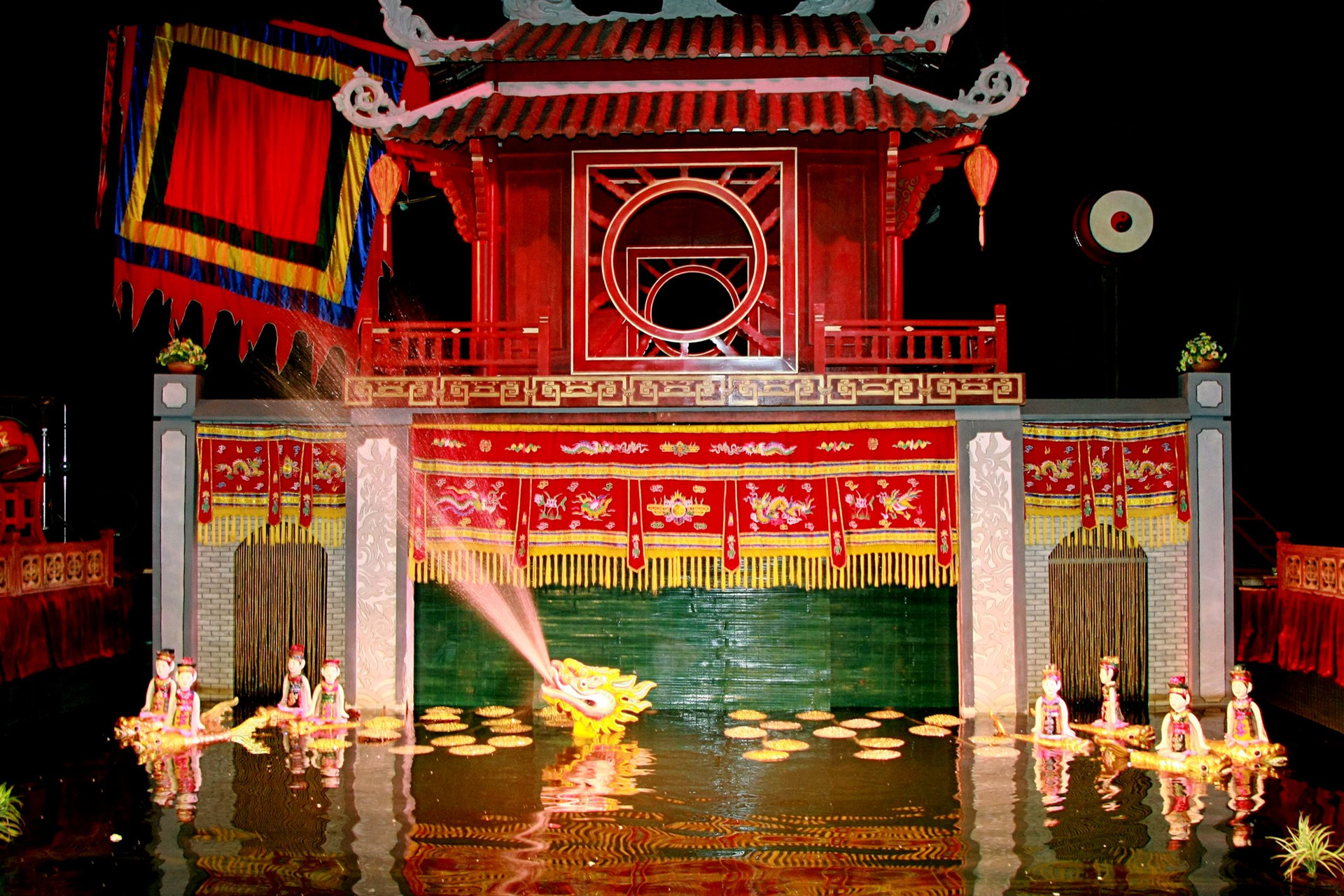
Water puppetry is unique to Vietnam. Featuring stories from everyday life and famous legends, it features fire-breathing dragons, farmers, frogs, old men, gods, goddesses, and fish. Performances are usually accompanied by music and have little dialogues. The stories, which are well-known to Vietnamese, are conveyed through actions. According to one story, water puppetry was developed in the 11th century in the Red River Delta by puppeteers who decided to carry on even though there was a flood. More of a folk art than a court art, it has a long history of being performed in ponds and rice paddies during lulls in the agricultural cycle. Water puppetry nearly died during the war years but has been revived in recent years and is enjoyed by Vietnamese and tourists. The Vietnamese government has asked that it be declared part of the world’s cultural heritage by UNESCO.
Dr. Jukka O. Miettinen of the Theater Academy Helsinki wrote: “Vietnam also has its own tradition of puppet theater, Mua Roi Nuoc (puppets that dance on water). It is an old and rare North Vietnamese form of puppet theater, and it has actively been revived since the 1980s. In a number of small villages near Hanoi water puppet theater is still performed at certain festivities, as it has been in times past. The pond and lakes of the northern plains, where crowds gathered during festival and galas, become the lively stages for the water puppet shows. At a water puppet show, the audience watches boat races, buffalo fights, fox hunts and other rustic scenes amidst the beating of drums and gongs. The characters plough, plant rice seedlings, fish in a pond with a rod and line, scoop water with a bamboo basket hung from a tripod, ect. The show is interspersed with such items as a Dance by the Four Mythical Animals: Dragon, Unicorn, Tortoise, and Phoenix and Dance by the Eight Fairies, in which supernatural beings enjoy festivities alongside people of this world.
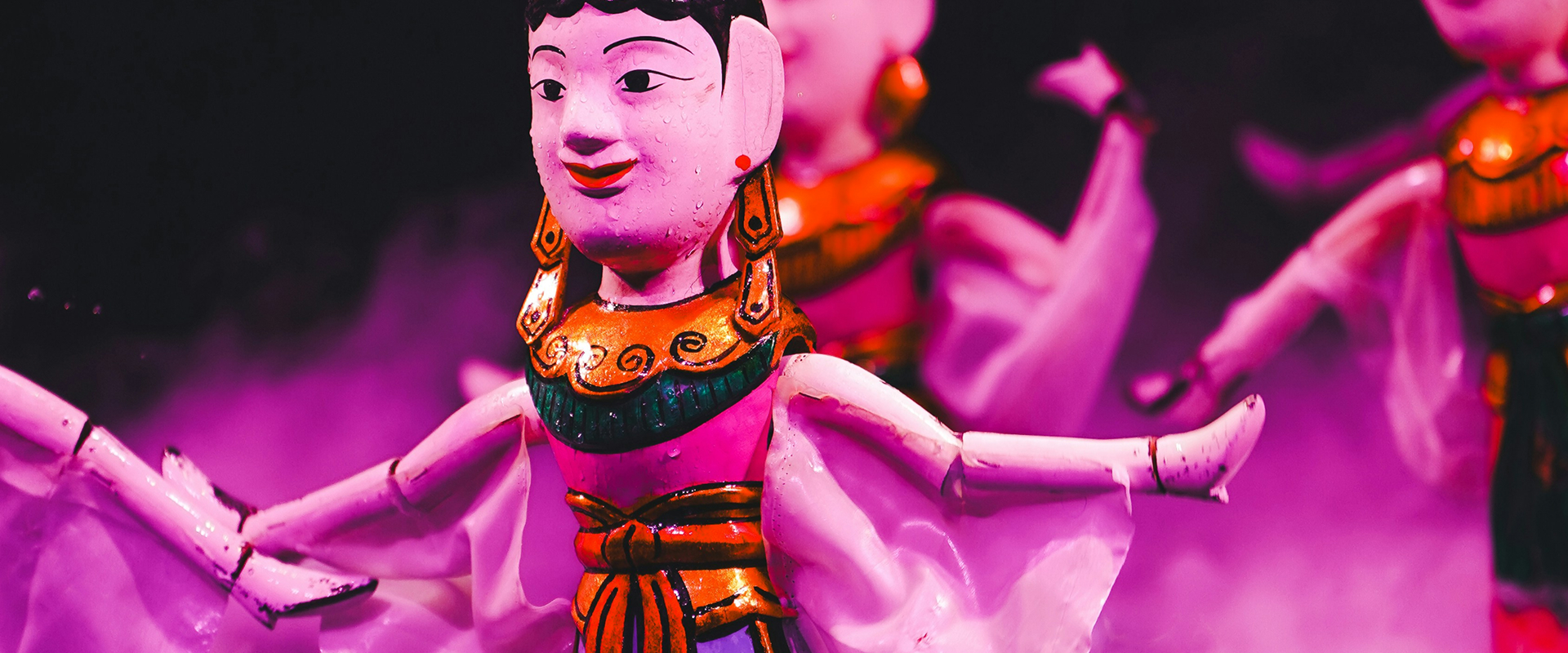
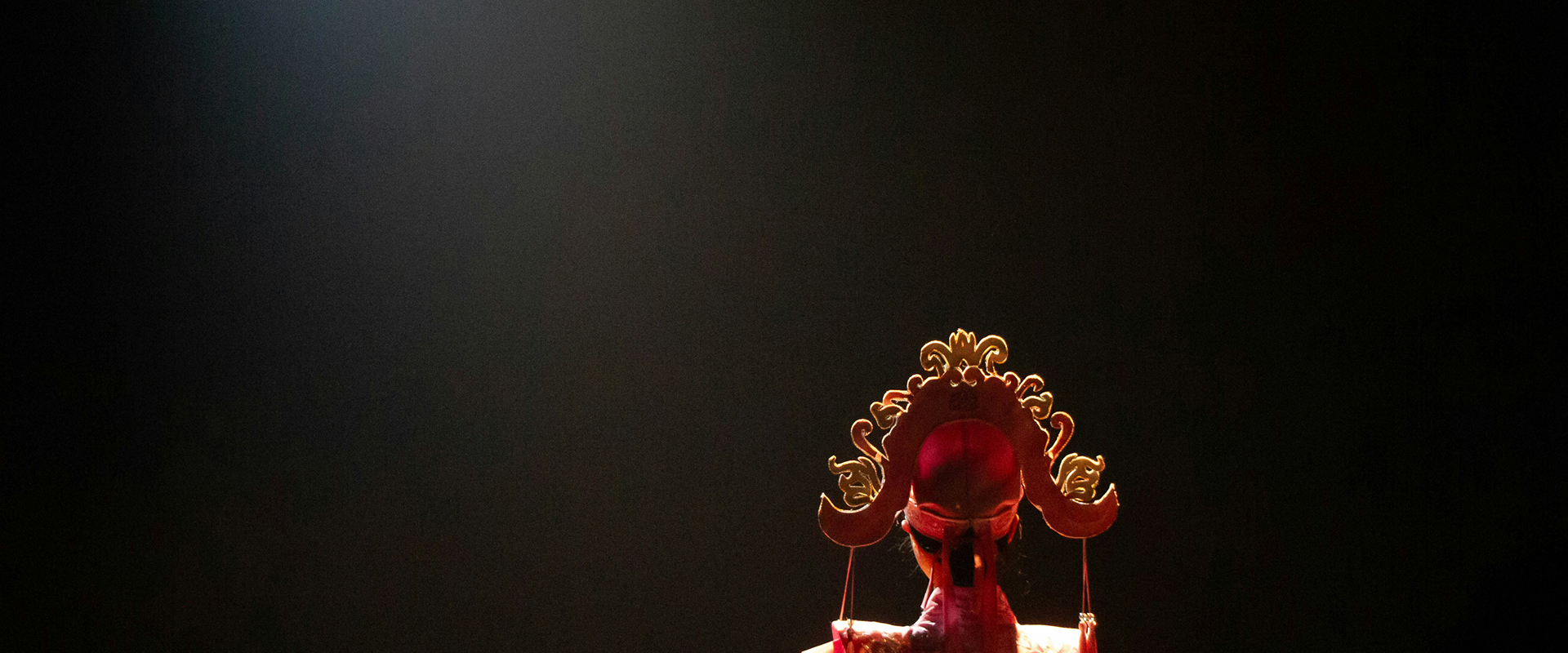
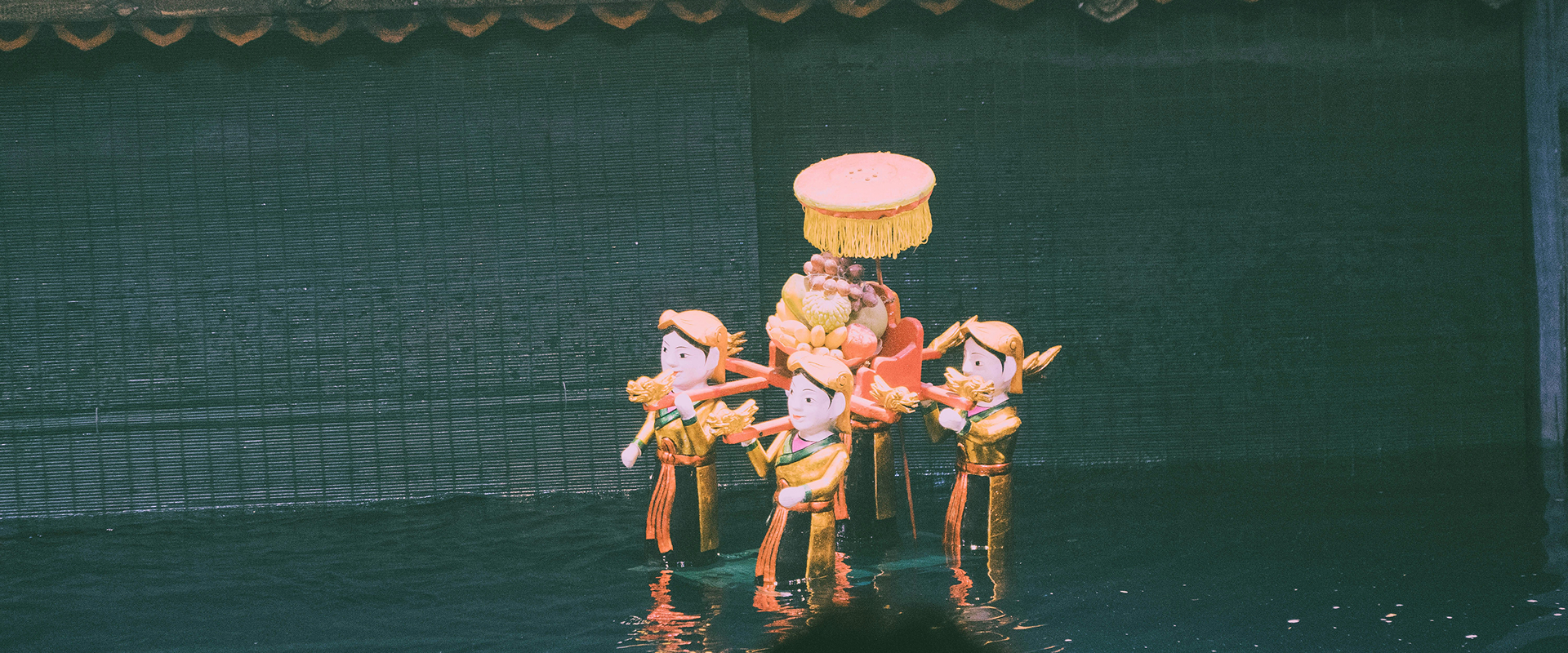
In 2005, Reuters reported from Chang Son, “At show time, wooden puppets 25 centimeters to 47 centimeters (10-18 inches) tall emerge from behind a bamboo blind, often in a blaze of colorful flags. The puppets are painted red and black, orange, brown and green. Some scripts carry the audience into a fantasy world of dragons spitting flames, unicorns, dancing phoenixes and fairies. Exploding firecrackers can add to the excitement, filling the air over the watery stage with smoke.
The unseen puppeteers stand barefoot, wearing only their their underwear, in the pond or paddy and send puppet people, elephants, buffalo, snakes and other animals gliding along the water using a system of rods, strings, levers and hinges.
These techniques are among the craft’s most closely guarded secrets, passed down through a family’s male line. For the past decade, women too have performed the task in professional arenas.
It takes years of practice to make the puppet’s maneuvering mechanism or to develop skills to move its body parts. The dolls are accompanied by musicians playing drums, flutes and other wind instruments while a narrator tells tales, some up to 90 minutes long with titles such as “Water buffalo creeps into a pipe”, ” A hero fights a tiget”, or “Fishing for Frogs”. One favorite in the furniture-making village of Chang Son in Ha Tay province about 45 kilometers southwest of Hanoi is ” Betel Nut offering” Traditionally, offering betel was the way to start a conversation in Vietnam. Village market vendor Phi Thi Hang said that she first saw puppets when she was 15. Fifty years later, she still attends the shows. Hang admiringly described a puppeteer skillfully maneuvering a puppet to hold up a tray of betel nuts while it floated around the pond. The puppet offered betel to audience members who removed the nuts and left money on the tray.
Tours We Recommend
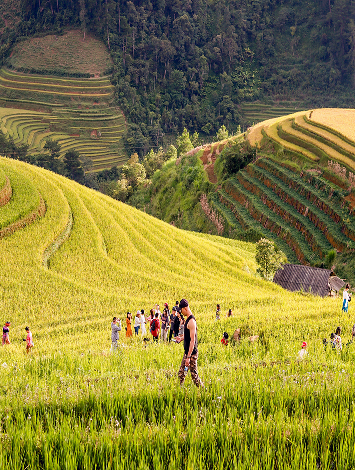

Muong Hoa Valley Medium Trek
$205 $165